
HOWARD UNIVERSITY RANKS NO 80 ON U.S. NEWS AND WORLD REPORT LISTING OF BEST NATIONAL UNIVERSITIES
Howard University’s graduate programs in nursing, business, law and education each received significant increases in the U.S. News and World Report’s 2022 “Best Graduate Schools” listing. The School of Nursing and Allied Health Sciences is ranked No. 46 for its nursing master’s program and No. 79 for occupational therapy, the School of Business is ranked No. 64 for its full-time MBA program, the School of Law is ranked No. 91; and the School of Education is ranked No. 91. Under the academic disciplines for social sciences and humanities, the Graduate School was recognized with a specialty rank of No. 3 in African American history and an overall rank of No. 48 in history; it also received a specialty rank of No. 7 in African American literature and an overall rank of No. 62 in English. In the medical school rankings, the College of Medicine ranked No. 1 for Most Diverse Medical School, No. 34 for graduates who serve in medically needy areas, and No. 47 for Graduates Practicing in Primary Care Specialties.
In September 2020, Howard University soared to No. 80 on the U.S. News & World Report list of the best national universities, as evaluated on 17 measures, including first-year student retention, graduation rates, strength of the faculty and alumni giving. The University was ranked No. 145 in 2014 and has elevated 65 positions to achieve the No. 80 rank. Howard is also currently ranked No. 31 for undergraduate teaching, No. 50 best college for veterans, No. 58 most innovative schools and No. 3 among private institutions for social mobility (No. 11 overall).
Founded in 1867, Howard University is a private, research university that is comprised of 13 schools and colleges. Students pursue more than 140 areas of study leading to undergraduate, graduate and professional degrees. The University operates with a commitment to Excellence in Truth and Service and has produced four Rhodes Scholars, 11 Truman Scholars, two Marshall Scholars, one Schwarzman Scholar, over 70 Fulbright Scholars and 22 Pickering Fellows. Howard also produces more on-campus African-American Ph.D. recipients than any other university in the United States. For more information on Howard University, visit www.howard.edu.

Back row left to right: Attorney Gail S. Baylor, Dr. Gwendolyn S. Bethea, Attorney Richard F. Scotton, Business Entrepreneur Ted L Scotton, Dr. Jacquelyn S. Joyner, Teacher/author Charles E. Scotton, Armed Service veteran Harry C. Scotton, Teacher/author Rebecca S. White, and
Dr. Teresa S. Williams
Front row: Reverend Harry F. Scotton and wife, Lina B. Scotton
A LEGACY OF STRENGTH
-By Gwendolyn S. Bethea
The following is an excerpt from the soon-to-be- published book, Memories: The True Story of an African American Family, written by the author. I remember that in the 1950s, 60s, and 70s, my father was a brick contractor, working from early morning until evening. After working a full grueling week, he would drive 30 to 100 miles one way to minister to faithful church congregations that he pastored in the eastern U.S. on Sunday mornings, for mid-week services, and week-long revivals. Even as a child, I found the services to be soul cleansing and inspirational, and the members to be heartwarming and welcoming. But the drive to church and back home could be wearisome for us sleeping children in the back seat. There were nine of us, but only five at a time at home for the most part since the others had gone off to college or the armed service. Mom would often remark that we were her “second set of children.”
I can still remember slipping into a deep sleep to the tune of upbeat gospel songs that played on the car radio. I also vividly recall the cars and trucks whizzing by on the busy interstate and the frightening, all-too frequent lights of car accidents that interrupted the otherwise routine late-night drives back home. To break the monotony on our Sunday morning rides, and probably to help him stay alert while driving, Dad would often break into our dreams with the words, “tune up” children. He wanted us to practice one or more gospel songs that he had taught us as part of our family singing group, which he had named “The Songbirds.” Dad and our faithful Mom often held hands during the nights driving back from church services. Without fail, she had stood by his side for more than 40 years of his ministry and during the many challenging seasonal changes of life as a brick mason’s wife. Many nights after arriving home and warming by the fireplace, we stayed up to do homework as Mom and Dad caught up on the news of the day. Walter Cronkite and Douglas Edwards of CBS were their favorite newscasters. The next morning, Dad and Mom would first awaken, then arouse us for school, and the week’s routine would begin again.
Segregated living conditions – the consequence of economic, political, and social discrimination, had prevailed throughout this period. It was not until the early 50s, with the passage of Brown vs Board of Education and the Civil Rights Act of 1964, that things would begin to change for our family and the African American community generally.
No more walking across town, passing whites-only schools, crossing busy streets (my sister was hit by a car on one of them, which angered my mom to the point of angrily demanding of the “city” that they place a stop light at that busy crossway).
No more segregated dining facilities. My big brother, Ted, as a high school student, had “sat in” at the local ice cream parlor. My oldest brother, Charles’s friend, had been one of the original Greensboro, NC four A & T students who led the sit ins that began at that memorialized lunch counter.
No more “for coloreds only” or “for whites only” signs above bathroom entrances and water fountains. No more second-hand school books with scribbled unrecognizable signatures and worn pages. Still, while largely aware of the legislated victories across the nation, the African American community would in later years lament the loss of warmth and familiarity of our segregated communities. They would bemoan the emphasis on excellence, and the frequent personal mentoring opportunities. But that is another story.
Dad and Mom were married 70 years before Dad passed at the age of 91 in 2006, after retiring from the ministry and brick contracting several years before. The churches are still flourishing today and his brick work sturdily remains as a testament to his craft in downtown High Point, NC. Mom passed three months later at the age of 88. She was not “ready to go;” in fact, she said, before she was hospitalized and after Dad had passed, “I believe I will now just stay in the home, reflecting on my life.” This was the second house that Dad had built for her, he reminded her, and “so that my children and grandchildren would have a place to come back to.” Mom had found refuge in the books that her girls had brought home from the school library and in her natural gift to write poetry. She had learned early as an adult to tap into this gift, especially when she felt the urge to chronicle her own life, that of her children, and the historic times in which they lived. She and Dad had reveled proudly in the accomplishments of their children.
Seven of the nine had graduated high school, colleges, and universities for their undergraduate and advanced degrees. Schools included both historically Black colleges and universities — North Carolina Central University, Howard University, and Winston Salem State University; and predominantly White schools — the University of Iowa, University of Wisconsin, Virginia Commonwealth University, and American University. Two were valedictorians, three had earned doctorates; the two youngest became lawyers, three became teachers at the elementary, college, and university levels, one was a businessman and navy veteran, and one had served in both the navy and army. All of them undoubtedly had appreciated the sacrifice of Mom and Dad through the years. However, it was now time for Dad and Mom to rest. The siblings, several with children and grandchildren of their own, had learned the lessons of strength, perseverance, and fortitude that had prepared them for the successes and challenges of their lives. Mom’s encouraging words would linger as she had declared, “things will always be better tomorrow, no matter how dark they seem today “.
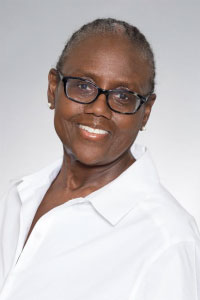
Charles R. Drew University’s HIV/AIDS Education and Outreach Projects – Now Addressing COVID-19
––By Cynthia Davis
Assistant Professor, College of Medicine Charles R. Drew University of Medicine and Science
The Charles R. Drew HIV/AIDS Education and Community Outreach Projects were established in 1984 to address the disproportionate impact of HIV/AIDS on racial ethnic minority populations. Today, the program’s College of Medicine Street Medicine Program is engaging in COVID-19 screening. In partnership with the federal government, state government and Los Angeles County Department of Health Services, the Street Medicine Program will be helping to coordinate COVID-19 vaccinations in South Los Angeles. Coordination of the COVID-19 screening will include outreach targeting unsheltered and sheltered homeless individuals living in the South Los Angeles SPA 6 region, as well as the Skid Row region of Los Angeles. The targeted individuals will receive COVID-19 screening and follow-up referrals, as appropriate, as well as case management services for housing, social services, and substance abuse prevention and intervention.
Initially funded by the Centers for Disease Control and Prevention from 1985 to 1992, the HIV/AIDS Project was national in its scope. The aim of the project was to provide HIV/AIDS-related primary prevention education to the African American community. In 1991, with a grant from the Los Angeles County Department of Public Health (LACDPH)), the Magic Johnson Foundation and Burroughs Welcome Pharmaceutical Company, CDU obtained a mobile testing van to provide free HIV screening services for at-risk populations living in South Los Angeles, East Los Angeles, and the Skid Row region of Los Angeles.
This demonstration project was so successful, the LACDPH replicated the project county-wide. The project was funded from 1991 to 2001, then had a break in funding, and then was refunded by the LACDPH from 2011 to 2019. This project provided free HIV testing to more than 60,000 community residents during this time. As of 2020, the project no longer offers mobile HIV screening services, but was recently funded by the LACDPH to offer Social and Sexual Networking HIV testing services.

In 2020, the mobile van was “re-purposed” to support a new College of Medicine Street Medicine Program funded by CVS Health and Aetna. Professor Cynthia Davis works in partnership with Dr. Alexander Rogers of the Department of Family Medicine at CDU in leading this new program, the major aim of which is to target individuals living in homeless encampments in South Los Angeles and the Skid Row area of Los Angeles to increase their access to primary health care and other support services.
Recently, Professor Davis stated, “For the past 37 years, I have had an opportunity to conduct broad-based community outreach and community mobilization initiatives to stem the tide of HIV/AIDS in highly impacted racial/ethnic minority communities on a local, statewide, national, and international basis.
Through multiple initiatives which I directed, I have successfully made a positive impact in increasing knowledge among vulnerable populations about how to slow the spread of HIV and other STDs, but more importantly, I have helped to empower the community-at-large, and helped to give ‘voice to the voiceless,’ in terms of HIV/AIDS-related policy, access, education, and advocacy. It has truly been a blessing for me to have had the privilege to be of service to communities of color for all of these years, and after 37 years, to still be in the struggle to end HIV/AIDS in our lifetime.”


Authors
-Ibram X. Kendi, Ph.D.
-Keisha N. Blain, Ph.D.
FOUR HUNDRED SOULS

Keisha N. Blain, Ph.D. and Ibram X. Kendi, Ph.D. have co-edited the book, Hundred Souls, a distinctive historical account of African Americans in the U.S. The New York Times #bestseller consists of a history through essays, short stories, poems, and other techniques by 90 African American writers who provide accounts of the 400-year history of African slavery, segregation, and resistance in the United States. Dr. Blain earned her Bachelor of Arts degree in history and Africana studies from Binghamton University before attending Princeton University for her master’s degree and Ph.D. in History. Dr. Blain is one of the nation’s leading scholars of African American history, African Diaspora Studies, and Women’s and Gender History. Blain is author of Set the World on Fire, among other books.
Ibram X Kendi is one of America’s foremost historians and leading scholars on anti-racism. He is a National Book Award-winning and #1 New York Times bestselling author of seven books. Kendi is the Andrew W. Mellon Professor in the Humanities and the Founding Director of the Boston University Center for Antiracist Research. Kendi is a contributor writer at The Atlantic and a CBS News Racial Justice Contributor. He is also the 2020-2021 Frances B. Cashin Fellow at the Radcliffe Institute for the Advanced Study at Harvard University. In 2020, Time magazine named him one of the 100 most influential people in the world.
In 2005, Kendi received dual B.S. degrees in African American Studies and magazine production from Florida A&M University. In 2007, Kendi earned an M.A. and in 2010 a Ph.D. in African American Studies from Temple University. Kendi is author of How to Be an Antiracist.
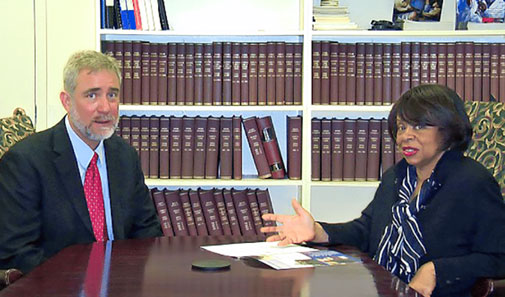
Dr. W. Malcolm Byrnes with Dr. Gwen Bethea, Founder/President, Historically Black Colleges and Universities Speaker’s Bureau and Research Magazine
An Interview with Dr. W. Malcolm Byrnes On Pioneering Biologist, Ernest Everett Just
Reprint from Quest, the Howard University Graduate School’s Research Magazine
-By Gwendolyn S. Bethea
TRANSCRIBED
-by Kyle R. Burton*
On November 19, 2013, Gwen Bethea, Ph.D., at that time the editor of the Howard University Graduate School Research Magazine, interviewed Dr. Malcolm Byrnes, associate professor of biochemistry and molecular biology in the College of Medicine, about pioneering early twentieth-century biologist Ernest Everett Just. Byrnes has dedicated part of the past ten years to ensuring that Just receives the recognition he deserves for his groundbreaking research in cell and developmental biology.
*At the time of this transcription, Kyle Renard Burton was a senior Biology/Pre-Medical student in Howard University’s College of Arts & Sciences Honors Program. During his junior year, he studied biochemistry at the University of Oxford as an ESUUS Luard-Morse Fellow and participated in varsity athletics. In fall, 2014, Kyle’s plans were to begin medical school in preparation for a career as a surgeon-scientist and a global health policy advocate. Update (May 7, 2020): An online search reveals that Kyle recently graduated from Harvard Medical School and the Kennedy School of Government with a joint MD-MPP degree, and is currently a first-year resident at Johns Hopkins School of Medicine.
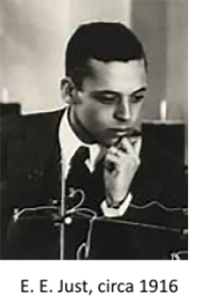
Dr. Bethea: What would you consider to be Just’s outstanding contributions and qualities?
Dr. Byrnes: Just is known not only for his discovery of the fast block to polyspermy in marine invertebrates, but he was also the first to realize that the cells of the cleavage embryo have surface properties that allow them to stick together, and that those properties are very specific to the particular developmental stage that the cells are in, so that, if cells from cleavage embryos in different stages of development are placed together, they won’t adhere to each other. The mosaic embryo that’s created won’t develop normally. Just was also acutely aware of the natural history of the animals that he studied. He sought to bring conditions of nature into the lab when he did his experiments. In a sense he can be thought of as a forerunner to today’s ecological developmental (Eco-Devo) biology.
And so, what happened was, you know, I was reading about Just and I was beginning to see strong parallels between his work and his vision of the cell and organism and the burgeoning field of Eco-Devo. So, you know, E. E. Just lived and worked at a time when African Americans were severely discriminated against. He had a very difficult time getting funding for his research. He was unable to obtain a faculty position at a major research institution even though he was internationally known. In the early part of his career he worked in Woods Hole, at the Marine Biological Laboratory there. Every summer he would go and work at Woods Hole. One of his books, called Basic Methods for Experiments on Eggs of Marine Animals, is essentially a compilation of all the different methods he developed at Woods Hole for how to handle eggs of marine invertebrates. [His other book, The Biology of the Cell Surface, is a synthesis of the body of his work and his philosophical ideas about biology.]
In 1929, he began to go abroad to Europe. Starting in 1929, he made altogether maybe 10 trips to Europe. He went to Naples; he went to Berlin-Dahlem in Germany, and to Paris. He ended up, around the year 1940, at a small research laboratory on the rugged coast of Brittany in France.
… one of his strongest qualities, was his perseverance in the face of almost insurmountable obstacles.
Throughout this time, he had great difficulty in being able to do his research, and I think one thing that characterizes him, one of his strongest qualities, was his perseverance in the face of these almost insurmountable obstacles. In fact, his mentor, Frank Lillie, writing to the President of the National Research Council, described Just as having “qualities of genius.” He said that nothing whatsoever deters him from his purpose. And I think that really is one of the things that characterizes a genius, because a genius is someone who pursues the truth doggedly and cannot let go of the truth. I think that that kind of perseverance in the face of extreme obstacles is a quality that Just had that was very rare. But he was not properly recognized during his lifetime. His work was not appreciated. It was really not until 1983, when Ken Manning published his biography of Just, Black Apollo of Science, that the work of Just became more broadly known. His work was cited up until the early 1940s, and then, basically, he was shut out. He was shut out by his American counterparts who sidelined him and treated him as an outsider. Part of the reason was because of his bold stance against prominent American biologists. Part of it was the fact that he gravitated toward Europe and European biology to the exclusion of American views. But he was basically shut out for 40 years. It really wasn’t until Ken Manning wrote his book that his work became known.
Dr. Bethea: So, in that way, would you say that he is a role model and possibly an inspiration for young people who are interested in going into science?
Any young scientist of any ethnicity whose results lead him or her to challenge the paradigms of science can find in E. E. Just a role model.
Dr. Byrnes: Absolutely! I do believe that E. E. Just is an incredible role model. He embodied all of the qualities that a successful scientist needs to have: perseverance, an embrace of the truth, a willingness to speak the truth in the face of opposition, you know. Any young scientist of any ethnicity whose results lead him or her to challenge the paradigms of science can find in E. E. Just a role model. And, you know, one thing about Just is that, if you look back over his life and history—his career—you can see that he took all of the right steps.He left the lowlands of South Carolina as a teenager.
He went up to New England and studied at a boarding school there in Meriden, New Hampshire, known as Kimball Union Academy. He went to Dartmouth College in Hanover. At Dartmouth he did an undergraduate research project. It was from that experience that he became interested in science.
So, when he joined the faculty at Howard in 1907 and moved to Biology in 1909, he looked about for ways to do research again. And that’s what led him to Woods Hole and his apprenticeship under Frank Lillie there. Then came his burgeoning career and his becoming an internationally known and respected scientist.
Of course, each person’s career trajectory is unique, but in general these steps are the same steps that any young person interested in science needs to take. And so Just provides sort of like a blueprint for how to do well in science and the qualities that you need: perseverance, hard work, preparation, all of those things.
Dr. Bethea: Thank you very much! I have enjoyed talking with you today.
Dr. Byrnes: It’s been my pleasure.
Orlando, Florida Law Enforcement Continues Partnership with Bethune-Cookman in Community Engagement Training

The Community Trust & Equity Initiative and Bethune-Cookman Community Engagement Project is continuing its partnership in a series of training sessions conducted by project lead Dr. Randy Nelson, Director of the Center for Law & Social Justice at Bethune-Cookman University. The sessions were held from November 19, 2020 through February 20, 2021.
Orlando Police Department officers, supervisors, commanders, representatives of the Mayor’s Office, and youth members of the Parramore, Washington Shores and Mercy Drive/Pine Hills communities attended the sessions with Dr. Nelson. Bethune- Cookman managed the meetings on a variety of topics, which included:
Recommendations from participants on ways that OPD can better serve the communities and how residents can be a stronger part of OPD’s crime prevention efforts will be made and a report from these meetings will be shared.
On a yearly basis, the Bethune-Cookman University Center Law and Social Justice (CLSJ) and its partners sponsor numerous workshops and forums that address common misconceptions among law enforcement and communities of color.
Since its founding in 2015, the CLSJ and its associates have trained more than 1,000 law enforcement and other criminal justice professionals from around the country and more than 500 local and regional community residents and stakeholders.
The trunk of a dead tree
there was a time
when we thought like
free flying eagles
a sudden flap of wings
a desire for equal justice
instantly fulfilled
an unimagined collective want
to satisfy each other.
we’ve lost the
habit of thinking
our thoughts live like trapped compelled souls
we see through
the roof of that fragile tree
patches of sky
clusters of clouds
and
schools of birds soar high.
we reminisce
about what used to be
plagued by desires
obsessed by wild thoughts
crowded by ghosts
of yesteryears tomorrows.
now
we are walled in together
the trunk is ancient
with shingles of crusted bark
mirroring
old faces
old passions
old grievances
and autocratic rulers
who kill time
and smother new branches of growth.
we know only oasis of silence
where gray colors the sky
and
birds forget to chirp
our gaze
falls upon strategic plans
where progress marches backward
and
thinking becomes a slipped away habit
in tentacles of leafless branches
provide no dialectical discussions
no progressive conversation
no lingering laughter
no feathered woody wood pecker
pecking hopefully
on the trunk of that dead tree.
the tree is rumbling rotten
a creature of narrowed consciousness
with
waving leaves of oppression
branches of discrimination
that turn any claim
to corkscrew of cronyism
to niceness in nepotism
to crawling corporatism
degree by degree by degree.
we are trapped
we are prisoners
where mental privation is a primary branch
we’re lost our concern
for each other
we leave our leaves with our jailers
in the trunk
of a dead tree.
lady janét
BLACK LIVES MATTER
WWW.AMAZON.COM