
Howard University Has Received One of the Largest Gifts in its History, an $80 million Investment from Philanthropist MacKenzie Scott
(Howard University Newsroom)
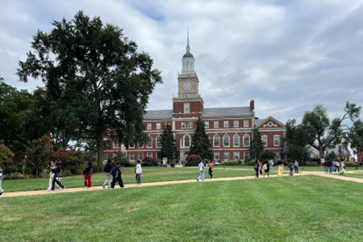

Howard University has received one of the largest gifts in its history, an $80 million investment from philanthropist MacKenzie Scott, who continues to make transformative gifts to higher education institutions, including historically Black colleges and universities (HBCUs). When combined with gifts of $40 million and $12 million to Howard in 2020 and 2023, respectively, this gift brings Scott’s recent contributions to Howard to $132 million. The $80 million is an unrestricted gift to Howard University and Howard University College of Medicine.
The gift will be used to accelerate Howard’s momentum and impact at the forefront of higher education research and student development. This year, the Carnegie Foundation and American Council on Education designated Howard as an R1 institution, a recognition reserved for colleges and universities with the highest levels of research activity in the nation. Also this year, LinkedIn and Forbes named Howard the nation’s top HBCU and U.S. News and World Report ranked Howard’s programs in business, computer science, economics, psychology and criminal and constitutional law, among others, as the best programs among HBCUs.
Georgia Dawn
In view of the upcoming 2026 elections, it is highly likely that the same kind of committed and dedicated work as that shown in the 2021 election of Raphael Warnock and Jon Ossof of Georgia to the US Senate, will be necessary. An article that appeared in issue 4 is an example of these successful efforts. A revisiting of this article appears below.

– By Jacquelynn V. Thompson
The weather across the State of Georgia on Tuesday, January 5, 2021, was crisp and cool. Despite the temperatures, prospective voters seemed to exude a warmth as they headed to the polls that day. To the casual observer, the numbers of folks didn’t seem to be overwhelming but there was a steady stream—from ’morn until night. But here’s the key: By that date, early voters in the State were striking in number, some 3.1 million according to Reuters as reported by MSN.com. Similarly, nearly 3.9 went to the polls—or mailed in their ballots – prior to the November 2020 General Election Date, according to georgiavotes.com. Who did it bode well for? Surprisingly, Georgia turned BLUE in both November and January. Is this the heralding of a new day, a Georgia Dawn?
It’s been close to three decades, since 1992, since the Peach State voted for a Democratic presidential candidate; and it was 2005 when Georgians last elected a Democratic senator. This past November, it was the new Georgia that helped to secure a Joe Biden and Kamala Harris presidency and vice presidency for the country. The January 2021 runoffs produced two incoming Democratic senators – Raphael Warnock and John Ossoff, who won hard-fought campaigns against incumbents Kelly Loeffler and David Perdue, respectively. Young folks, seniors, first-time voters and all those in-between not only put blue into play but, ultimately, for the win!

Newly elected Senator John Ossoff, Atlanta major Keisha Lance Bottoms, who endorsed Ossoff and Warnock, Senator Raphael Warnock; and Stacey Abrams, former member, Georgia House of Representatives, Fair Fight grassroots organization
Behind every winning effort is a strategic plan, critical thinking and just plain rolling up of the sleeves for a purpose. Enter Stacey Abrams and her Fair Fight grassroots organization and other community groups that made Georgia Blue a reality. Abrams turned her loss of Georgia’s governorship run in 2018 into a continuous, relentless fight against voter disenfranchisement and a fight for voter rights, access, and education. Simply put, her work is a case study for how people power can be achieved when a mission is clearly defined and a sound plan is executed.
Gwendolyn Bush-Hodge, Georgia native and current Washington, D.C. resident and Career Director, was exuberant. “Georgia turning blue means more equality and an opportunity to take this country in a new direction for a ‘more perfect Union,” she stated. “Coupled with what happened on January 6th in the Nation’s Capital, I thought about the blood, sweat and tears of my ancestors, who did not have the right to vote. But now the Deep South is sending one of its African American sons to represent the State in Congress … That old adage, ‘You’ve come a long way, baby,’ comes to mind … This was years in the making … Georgians from every hamlet, small town, large city, county and rural area voted in record numbers.
“This time every vote did count and the suppression of votes was held at bay,” Bush-Hodge continued. “Yes … Finally, Georgia is blue … Hank Aaron could not have hit a bigger home run … Georgia, you are still on our minds!”
Jacquelynn V. Thompson, Howard University alumna, is an Educational Consultant originally from Buffalo, New York. She is a former public relations and alumni professional at the University of the District of Columbia. In her spare time, she is a visual artist.
Exploring the Significance of the HBCU Experience
– by Sydney Taylor
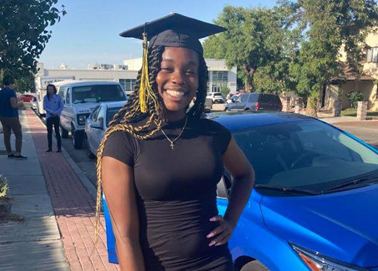
What is an HBCU? By definition, a Historically Black College or University (HBCU) is an institution of higher education established before 1964 with the primary mission of educating Black Americans. These schools emerged in response to the legalized segregation and racial prejudice that prevented Black students from accessing predominantly white institutions throughout the 19th and early 20th centuries. Following the Civil War and during Reconstruction, HBCUs became essential spaces for social advancement, intellectual growth, and community empowerment (Norment, 2025)
Over time, HBCUs have evolved into a more diverse academic environment. While they were originally created to serve Black students, individuals from different racial, cultural, and international backgrounds now attend these institutions. In recent years, especially around 2023, HBCUs have experienced a noticeable rise in enrollment as more students recognize the value of culturally affirming education, strong alumni networks, and supportive learning environments. This growth has not come without challenges. The Office of Institutional Advancement at Wilberforce University (2025) notes the shortages in campus housing and increasing demands on institutional resources. Still, these challenges reflect expansion and progress. A greater number of college-educated individuals strengthens both the national economy and the communities these graduates serve.
The impact of HBCUs is evident in the leaders they have produced. Influential figures such as former Vice President Kamala Harris, who ran for president in 2024, and the late Dr. Martin Luther King Jr. , the legendary Civil Right leader, began their academic journeys at HBCUs. Their accomplishments demonstrate the essential role these institutions play in shaping intellectual leadership within the United States. However, the current climate for HBCUs is not without hardship. Shifts in national policies have targeted Diversity, Equity, and Inclusion (DEI) initiatives; these are principles that lie at the core of HBCU missions. DEI programs help ensure fair access to education and reduce discrimination in both academic and professional spaces.
Efforts to dismantle these initiatives threaten the historical purpose of HBCUs and the protections upon which students rely.
Despite these pressures, Black students remain determined. During the 2021–2022 academic year, approximately 74% of Black students at HBCUs earned degrees, reflecting their commitment to success (National Center for Education Statistics, 2025), Each graduating class represents a new generation of scholars prepared to enter the workforce, uplift their communities, and continue the legacy of resilience established by earlier graduates.
A current student from the University of the Virgin Islands states that “HBCUs are a part of our history, present and future and are worthy of our support.” HBCUs are more than educational institutions, they are cultural pillars that preserve history while shaping future leaders. Through adversity and growth, they remain dedicated to providing opportunity, encouraging excellence, and sustaining the legacy of Black achievement in higher education.
Sydney Taylor, a senior at the University of the Virgin Islands, is currently studying Communications and working to receive the Bachelor of Arts. She is also a student athlete and has played such sports as gymnastics and basketball. While attending college, she has gained experience with journalism, content creation, and film, and has enjoyed delving into the world of media and communications. She wants to explore occupations in the field of journalism, creative direction, and brand management.
References
Arnold, L. (2025, August 18). HBCUs on the rise: Growth, housing challenge and the power of Alumni Support – Wilberforce University. Wilberforce University – America’s 1st Private HBCU. https://wilberforce.edu/hbcus-on-the-rise-growth-housing-challenges-and-the-power-of-alumni-support/
How do college graduates benefit society at large? APLU. (2024, July 31). https://www.aplu.org/our-work/4-policy-and-advocacy/publicuvalues/societal-benefits/
The Institute of Education Sciences. (n.d.). The NCES Fast Facts Tool provides quick answers to many education questions (National Center for Education Statistics). National Center for Education Statistics (NCES) Home Page, a part of the U.S. Department of Education. https://nces.ed.gov/fastfacts/display.asp?id=667
Norment, L. (2025, February 20). Black colleges reflect our history and our future. do we still need HBCUs? yes!: Opinion. (The Commercial Appeal. https://www.commercialappeal.com/story/opinion/columnists/2025/02/19/historically-black-colleges-universities-dei-education/79088622007)
HBCU RESEARCH HIGHLIGHTS
Hampton University Celebrates Trailblazing Legacy in Atmospheric Sciences with role in NASA’s AIM Mission (www.hamptonu.edu.)
NASA’s First Satellite Mission Led by an HBCU Marks Anniversary Milestone
HAMPTON, Va. (April 15, 2025) – Eighteen years ago, Hampton University reached for the stars—quite literally—motivated by a desire to answer fundamental questions about Earth’s changing atmosphere. At a time when global concern about climate change and its long-term consequences was mounting, the university sought to elevate its voice in the scientific community, disrupt the status quo in aerospace research, and offer students from underrepresented backgrounds a front-row seat to history.
During the month of April, the school celebrated the groundbreaking success and enduring impact of the Aeronomy of Ice in the Mesosphere (AIM) mission, the first NASA satellite mission led by a Historically Black College or University (HBCU). Launched on April 25, 2007, AIM significantly advanced scientific understanding of noctilucent clouds (NLCs) and their role in climate dynamics before concluding its mission in August 2024

Under the leadership of Dr. James M. Russell III (pictured), former Director of Hampton’s Center for Atmospheric Sciences, AIM was designed to investigate the mysterious formation and behavior of these wispy, glowing clouds that form near the edge of space. The mission yielded invaluable insights into atmospheric temperature shifts, solar radiation, and greenhouse gas effects, laying the groundwork for new models of Earth’s upper atmosphere.
But perhaps AIM’s most lasting impact lies in the people it inspired. Over the course of the mission, more than 60 Hampton University undergraduate and graduate students gained hands-on research experience through the AIM project—many for the first time. Students worked alongside top scientists and engineers, contributed to peer-reviewed papers, and presented findings at international conferences. Several alumni have gone on to earn Ph.D.s in atmospheric sciences, work at NASA centers across the country, or teach in STEM fields, helping to diversify and strengthen the national scientific workforce.
“AIM was not just a scientific milestone—it was a catalyst for opportunity,” said Dr. Isi Ero-Johnson, Dean of the School of Science. “Our students became published researchers, policy advisors, and space scientists. They saw what was possible when a university like Hampton believes in its capacity to lead.”
The AIM mission was a collaboration of innovation and excellence, supported by NASA, the University of Colorado’s Laboratory for Atmospheric and Space Physics (LASP), Virginia Tech, and industry partners including Orbital Sciences Corporation and Global Atmospheric Technologies (GATS), Inc. At its core, AIM embodied Hampton’s commitment to academic rigor, scientific achievement.
“It has been a pleasure and a privilege to work with the dedicated and talented AIM team, which combined NASA, university and industry partners to enable the groundbreaking success of the AIM mission,” said Dr. Robert Loughman, chair of the department of Atmospheric and Planetary Sciences. “We’re honored that Hampton University served as the lead institution and proud of the role we continue to play in preparing the next generation of atmospheric scientists.”
Over its nearly 15-year operational period, AIM delivered groundbreaking data on atmospheric temperature variations, solar influences, and the effects of greenhouse gases. The mission’s scientific contributions are evidenced by nearly 400 published research papers, with ongoing studies utilizing AIM’s extensive data archive.
As the world continues to grapple with the consequences of a changing climate, Hampton University remains a vital contributor to atmospheric science and space exploration, offering a model for what’s possible when vision meets access and excellence meets opportunity.
About Hampton University
Hampton University is a Carnegie R2-designated research institution, recognized for its groundbreaking research in atmospheric science, cancer treatment, and cybersecurity. Contributing $530 million annually to the regional and Commonwealth of Virginia economies, Hampton plays a vital role in driving economic development while championing diversity, inclusion, and opportunity. The university was recently named one of the “Best Colleges in America” by Money Magazine and recognized as the “Best Private College” by Coastal Virginia.
Founded in 1868, Hampton University is a close-knit community of learners and educators, representing 44 states and 32 territories, committed to nurturing intellectual curiosity, critical thinking, and global citizenship. For more information, visit www.hamptonu.edu.
For media inquiries regarding Hampton University, please contact Mahogany Waldon in the Office of University Relations at
mahogany.waldon@hamptonu.edu or 757-727-5253.
Project to Address Mental Health Issues in Prince George’s County

MEDIA CONTACT: David Thompson,
dlthompson@bowiestate.edu, 301-860-4311
BOWIE, Md.) — Bowie State University has been awarded a $99,999 subaward grant from the National Institutes of Health’s Artificial Intelligence/Machine Learning Consortium to Advance Health Equity and Researcher Diversity (AIM-AHEAD) Program. The funding will support the establishment of a new AI and Machine Learning Health Research Laboratory on campus—marking a pivotal step in advancing health equity through technology-driven research.
In its first year, the lab will focus on building its technical infrastructure and assembling a cross-disciplinary team of faculty, staff and students with deep expertise in artificial intelligence, data science and public health. The second year will concentrate on conducting applied research.
Bowie State’s AI/Machine Learning Health Research Laboratory will explore the social and demographic risk factors contributing to persistent mental health challenges across Prince George’s County. By applying advanced machine learning algorithms to large-scale data sets, researchers aim to uncover hidden patterns and predictors of behavioral health issues that often go undetected in conventional clinical settings.
“Implementing AI technologies to address issues will improve health in Prince George’s County and help pinpoint high-risk populations before they develop chronic conditions which can enable targeted preventive care and early detection,” said Dr. Melissa Duchene-Kelly, the research project lead. “Our interdisciplinary team approach will bring together experts from computer science, psychology, public health and other disciplines to identify and create interventions for individuals struggling with behavioral health.”
By engaging a wide range of subject matter experts, the project will support the development of personalized intervention strategies and digital therapeutic tools aimed at enhancing treatment effectiveness and expanding access to quality care.
“This innovative approach holds tremendous promise for improving health outcomes in our community and establishing Bowie State as a leader in AI-driven health research,” said Duchene-Kelly.
The AIM-AHEAD project is a joint effort between Bowie State University and the University of Texas Health Science Center and is part of a national initiative to boost the participation and representation of underrepresented researchers in the evolving fields of artificial intelligence and machine learning.
About Bowie State University
Founded in 1865, Bowie State University is the first Historically Black College/University (HBCU) in Maryland and one of the ten oldest in the country. Bowie State has earned the ‘Research College and University’ designation in the 2025 Carnegie Research Activity Classification. As a leading institution of higher learning, Bowie State offers more than 65 bachelor’s, master’s, doctoral and certificate programs across arts and sciences, technology, business, education, healthcare and related disciplines. The university provides high-quality and affordable educational opportunities in a supportive environment that empowers students to think critically, make new discoveries, value differences and emerge as leaders in a highly technical, rapidly changing global society. For more information about Bowie State University, visit bowiestate.edu.
Special Commentary
The Journey Within: Your Path to Professional and Personal Fulfillment
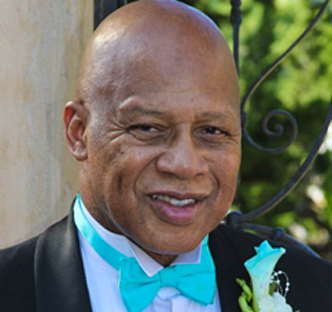
-By Thomas Scotton
In the relentless pursuit of professional success, it’s easy to lose sight of a fundamental question: Are you truly fulfilled? Beyond the titles and deadlines, are you building a career—and a life—that aligns with your deepest sense of purpose? This is the starting point for what can be called “The Journey Within,” an internal exploration that is the core engine for sustainable success and profound satisfaction.
This journey often begins with a quiet moment of self-awareness—an “Awakening.” It’s the high-flying executive who feels an unmistakable emptiness despite a string of successes, or the recent graduate overwhelmed by a world of options. These moments are not crises to be feared, but invitations to look inward and ask, “What needs to change?” This self-awareness is the foundational competency upon which all other growth is built.
Once you’ve awakened to this journey, your mindset becomes your primary navigational tool. The distinction between a fixed mindset and a growth mindset is the difference between a barrier and a bridge. A fixed mindset views challenges as things to be avoided and criticism as a personal attack. In contrast, a growth mindset embraces challenges as opportunities for growth and sees feedback as valuable data. This is not just a theoretical concept; it has a tangible impact on the bottom line. A 2024 TalentLMS report found that 80% of senior executives agree that a growth mindset among employees contributes to revenue growth, with 64% reporting higher productivity and performance [1]. The single most powerful strategy to cultivate this is to change your internal dialogue. When your inner voice says, “I can’t do this,” add one powerful word: “yet.”
The journey within is not always a paved road. Resilience is the key to navigating the inevitable setbacks. But resilience is more than just toughness; it’s the ability to transform challenges into fuel for future growth. Two of the most powerful tools for building this resilience are mindfulness and self-compassion. Mindfulness is the practice of living in the present, which improves focus and reduces stress. Self-compassion is the antidote to the harsh inner critic that so many of us carry. It’s about creating the psychological safety needed to take risks and learn from failure without being paralyzed by self-judgment. Research from the University of Wisconsin has shown that compassion can be cultivated like a skill, affecting brain regions that make you more empathetic [2].
Ultimately, personal development is a continuous journey, not a destination. There is no finish line where you finally “arrive.” The ultimate call to action is to commit to a philosophy of lifelong learning, to stay open to new experiences, and to continually adapt and grow. The Journey Within is not a path you find, but a path you forge. Forge it with courage and intention, and you will build a life that is not just successful, but significant.
Dr. Thomas F. Scotton is a distinguished business consultant and executive coach renowned for his unique and impactful approach to fostering both personal and professional growth. With a rich background spanning diverse industries, he leverages his advanced understanding of business dynamics alongside a deep passion for empowering individuals to achieve their aspirations. His reputation as a trusted expert is built upon his tailored methodologies, which prioritize active listening and a thorough understanding of each client’s unique needs.
References
Robinson, B. (2024, October 27). 80% Of Companies Say A Growth Mindset Among Employees Directly Drives Profits. Forbes. Retrieved from https://www.forbes.com/sites/bryanrobinson/2024/10/27/80-of-companies-say-a-growth-mindset-among-employees-directly-drives-profits/
Robinson, B. (2024, August 11). 5 Reasons Replacing Self-Judgment With Self-Compassion Boosts Career Success. Forbes. Retrieved from https://www.forbes.com/sites/bryanrobinson/2024/08/11/5-reasons-replacing-self-judgment-with-self-compassion-boosts-career-success/
Recently Published Books
Book review
Black, White, Colored by Internationally Acclaimed Mother-Daughter Duo, Lauretta and LeeAnet Noble

In Black, White, Colored. internationally critically acclaimed mother-daughter duo, Lauretta and LeeAnet Noble trace the erased steps of their ancestors William and Lawrence Malloy Sr. who were part of a historical community in the deep south.
In 1898 the town of Laurinburg was flourishing. A town of mostly Scottish and Black residents, with many areas built to protect them from dangerous outsiders, made unique strides. Black students were receiving record funding for education from the local government, Black and white community members came together to start a new political party and focused on the diversity of political positions, placing Black leaders on the board of education, and positioning the town for economic success. The Malloy family was at the helm of the community with multiple businesses serving both the white and Black side of the tracks.
On the eve of the election day, the town was the victim of a bloody attack. This attack led to the only recorded insurrection in America’s history. Not only were the Black residents attacked, anyone with opposing views, governors and public figures from the new fusionist party were forced to flee.
The aftermath resulted in the removal of Black leaders from positions, the upheaval of the newly founded fusionist party/
A wealthy Black entrepreneur in the community called on Booker T. Washington to help Laurinburg. This call resulted in the founding of the first Black boarding school in the United States, Laurinburg Institute and a rally cry to the town to gather around the children and their education.
William Malloy, the grandfather of Lauretta Malloy heard the cry, donated land and sent all of his eight children to the boarding school followed by college and medical schools at various HBCUs including Howard University and Meharry Medical College. His son Lawrence became best friends with Dizzy Gillespie at the boarding school that was also connected to the ancestors of Spike Lee, Danny Glover and more. The Malloy home became a place of respite for renowned Black artists, entrepreneurs and award-winning athletes over the years before Lawrence moved to Silver Spring, Maryland.
The community came together time after time, always with their heads held high. Black, White, Colored tells their story as they navigate storm after storm while pushing to hold on to their culture and progress from the vieszpoint of generations of the Malloys, once the most prestigious family in this North Carolina town. Black, White, Colored shines a light on the past to guide us towards a better future. Black, White, Colored shines a light on the past to guide us towards a better future.
BLACK, WHITE, COLORED | Kirkus Reviews
Pre order links
Amazon
Click Here:
Barnes & Noble
Click Here:
Giveaway (Closes Nov. 1)
Click Here:
NEW RESEARCH by HBCU STUDENT ZOE’Swanna K. McGee
-McGee, Zoe’Swanna K.
Veils of Oppression: An Exploration of Paul Fitzsimmons Eve and His Impact on Enslaved Black Women’s Lives” (2025). All Graduate Theses and Dissertations, Fall 2023 to Present. 567.
https://digitalcommons.usu.edu/etd2023/567
Abstract
This thesis contributes to the ongoing study of gender, race, and medicine in the United States, focusing on Dr. Paul Fitzsimmons Eve and his practices. By examining the experiences of enslaved black women subjected to his surgical procedures and experiments, medical racism, harm, and exploitation become visible.
https://digitalcommons.usu.edu/cgi/viewcontent.cgi?article=1560&context=etd2023